Author: Consultant

  • ROYAL BANK OF CANADA REPORTS SECOND QUARTER 2023 RESULTS

    Royal Bank of Canada11 (TSX: RY) (NYSE: RY)) today reported net income of $3.6 billion for the quarter ended April 30, 2023, down $604 million or 14% from the prior year. Diluted EPS was $2.58, down 13% over the same period. Adjusted net income7 and adjusted EPSof $3.8 billion and $2.65 were down 13% and 11% from the prior year, respectively.

    Results this quarter reflected higher provisions for credit losses, with a PCL on loans ratio of 30 bps, mainly attributable to provisions taken on performing loans in the current quarter, largely driven by unfavourable changes in our credit quality and macroeconomic outlook, as compared to releases in the prior year which reflected reduced uncertainty from the COVID-19 pandemic. The current quarter also reflected higher provisions on impaired loans.

    Pre-provision, pre-tax earnings7 of $5 billion were up $54 million or 1% from a year ago, mainly reflecting higher net interest income driven by higher interest rates and strong loan growth in Canadian Banking and Wealth Management. Higher Corporate & Investment Banking revenue in Capital Markets also contributed to the increase. These factors were partially offset by higher expenses, mainly due to higher staff-related costs, including from headcount growth, as well as stock-based compensation. Higher professional fees (including technology investments) and higher discretionary costs to support strong client-driven growth also contributed to higher expenses.

    Today we declared a quarterly dividend of $1.35 per share reflecting an increase of $0.03 or 2%.

    https://www.newswire.ca/news-releases/royal-bank-of-canada-reports-second-quarter-2023-results-884048760.html

  • U.S. crude stockpiles post massive surprise drawdown, EIA says

    U.S. crude oil and distillate inventories fell unexpectedly last week as imports declined, while gasoline stockpiles dropped more than forecast, the Energy Information Administration said on Wednesday.

    Crude inventories fell by 12.5 million barrels in the week to May 19 to 455.2 million barrels ahead of the driving-intensive Memorial Day weekend holiday, compared with analysts’ expectations in a Reuters poll for an 800,000-barrel rise.

    Net U.S. crude imports fell by 1.25 million bpd, the EIA said, while the crude oil adjustment figure fell by 1.16 million barrels per day, according to the EIA data.

    Gasoline, jet fuel and distillate product supplied – proxies for fuel demand – each rose last week, helping to fuel the drawdowns in stocks.

    Refinery crude runs rose by 79,000 barrels per day, and refinery utilization rates fell by 0.3 percentage point in the week.

    “It looks like demand is back. … Refiners are absolutely going max out with refinery runs right now, trying to keep up with demand,” said Phil Flynn, an analyst at Price Futures Group.

    Distillate stockpiles, which include diesel and heating oil, fell by 600,000 barrels to 105.7 million barrels, their lowest level since May 2022, EIA data showed.

    Gasoline stocks also fell by a more than expected 2.1 million barrels in the week to 216.3 million barrels, the EIA said.

    Crude stocks at the Cushing, Oklahoma, delivery hub rose by 1.8 million barrels in the week, the EIA said.

    Domestic production rose by 100,000 barrels per day in the week, but the four-week average of 12.275 million barrels per day is only up 3.4 per cent from year ago levels.

    “The rate of growth is disappointing given the low price of oil and the fact that producers are slowing down on their capital spending for drilling,” said Andrew Lipow, president of Lipow Oil Associates in Houston.

  • Bank Of Nova Scotia: Fiscal Q2 Earnings Snapshot

    Bank of Nova Scotia (BNS) on Wednesday reported fiscal second-quarter net income of $1.57 billion.

    The bank, based in Toronto, said it had earnings of $1.24 per share. Earnings, adjusted for non-recurring costs, were $1.25 per share.

    The results did not meet Wall Street expectations. The average estimate of four analysts surveyed by Zacks Investment Research was for earnings of $1.32 per share.

    The bank posted revenue of $12.78 billion in the period. Its revenue net of interest expense was $5.85 billion, which also missed Street forecasts.

    Bank of Nova Scotia shares have climbed slightly since the beginning of the year. The stock has declined 23% in the last 12 months.

    The bank says it will now pay a quarterly dividend of $1.06 per share, up from $1.03 per share.

  • BMO Financial Group Reports Second Quarter 2023 Results

    BMO’s Second Quarter 2023 Report to Shareholders, including the unaudited interim consolidated financial statements for the period ended April 30, 2023, is available online at www.bmo.com/investorrelations and at www.sedar.com.

    Financial Results Highlights

    Second Quarter 2023 Compared with Second Quarter 2022:

    • Net income of $1,059 million, compared with $4,756 million; adjusted net income1,3 of $2,216 million, compared with $2,187 million
    • Reported earnings per share (EPS)2 of $1.30, compared with $7.13; adjusted EPS1,2,3 of $2.93, compared with $3.23
    • Provision for credit losses (PCL) of $1,023 million, compared with $50 million; adjusted PCL1,3 of $318 million, compared with $50 million
    • Return on equity (ROE) of 5.6%, compared with 34.5%; adjusted ROE1,3 of 12.6%, compared with 15.7%
    • Common Equity Tier 1 (CET1) Ratio4 of 12.2%, compared with 16.0%

    Year-to-Date 2023 Compared with Year-to-Date 2022:

    • Net income of $1,306 million, compared with $7,689 million; adjusted net income1,3 of $4,488 million, compared with $4,771 million
    • Reported EPS2 of $1.62, compared with $11.57; adjusted EPS1,2,3 of $6.15, compared with $7.12
    • PCL of $1,240 million, compared with a recovery of $49 million; adjusted PCL1,3 of $535 million, compared with a recovery of $49 million
    • ROE of 3.4%, compared with 28.0%; adjusted ROE1,3 of 13.0%, compared with 17.2%

    BMO Financial Group Increases Common Share Dividend By 4 Cents From The Prior Quarter, Up 6 Per Cent From The Prior Year

    https://www.newswire.ca/news-releases/bmo-financial-group-reports-second-quarter-2023-results-818090767.html

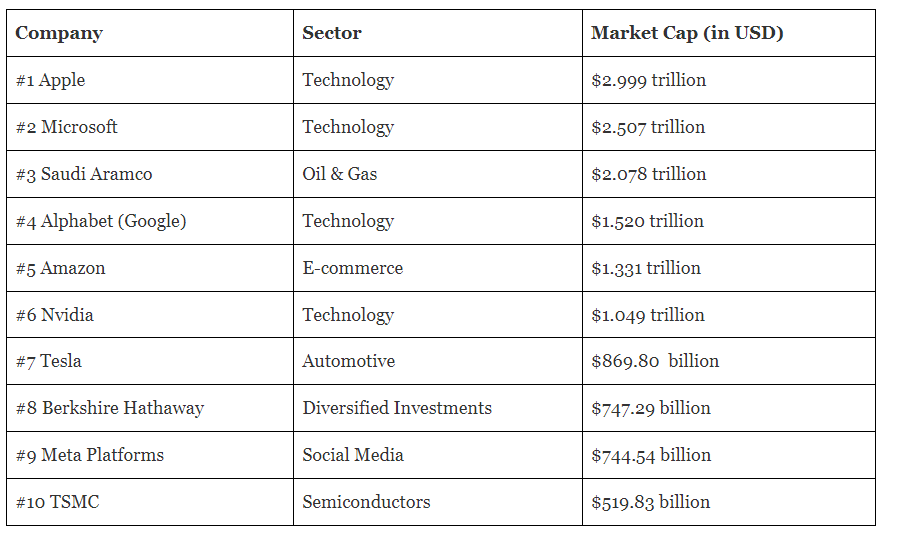
  • Apple announces multibillion-dollar deal with Broadcom for U.S.-made chips

    • Apple on Tuesday announced a new multibillion-dollar deal with Broadcom to develop 5G radio frequency components in the U.S.
    • “We’re thrilled to make commitments that harness the ingenuity, creativity, and innovative spirit of American manufacturing,” Apple CEO Tim Cook said in a release.
    • Apple said its deal with Broadcom is part of its 2021 commitment to invest $430 billion in the U.S. economy.

    https://www.cnbc.com/2023/05/23/apple-announces-multibillion-dollar-deal-with-broadcom-for-us-made-chips.html

  • Saudi oil minister warns market speculators to ‘watch out’ ahead of OPEC+ meeting

    • Saudi oil minister Prince Abdulaziz bin Salman on Tuesday told market speculators to “watch out,” reiterating his warning that they could face pain ahead.
    • “Speculators, like in any market, there are there to stay. I keep advising that they will be ouching. They did ouch in April. I don’t have to show my cards, I’m not [a] poker player (…) but I would just tell them, watch out,” he said at the Qatar Economic Forum.
    • OPEC+ is next set to convene at a ministerial level on June 4 to decide further production policy steps.

    Saudi oil minister Prince Abdulaziz bin Salman on Tuesday told market speculators to “watch out,” reiterating his warning that they could face pain ahead.

    “Speculators, like in any market, they are there to stay. I keep advising that they will be ouching. They did ouch in April. I don’t have to show my cards, I’m not [a] poker player (…) but I would just tell them, watch out,” he said during an energy-focused panel of the Qatar Economic Forum in Doha.

    The Saudi oil minister has previously struck out against oil price speculators looking to profit off predicting the output decisions of OPEC+, which next meets on June 4.

    Most recently, several members of the OPEC+ alliance voluntarily — and independently from the group’s broader strategy — announced they would cut their crude oil production by a combined 1.6 million barrels per day. The move briefly boosted prices, which have since surrendered gains. Ice Brent futures with July expiry were up 50 cents per barrel from the May 22 settlement at $76.49 per barrel by 12:05 p.m. London time.  

    OPEC+, a group of 23 oil-producing nations chaired by Saudi Arabia, in October decided to lower output by 2 million barrels per day in an effort to bolster prices, given concerns over global consumption. The move was met with immediate backlash from the U.S. over the strain on fuel-consuming households.

    “We were, as OPEC+, blamed in October, blamed in April. Who has the right numbers? Who gauged the situation in a much more, I would say, responsible way, but attentive way?” Abdulaziz said on Tuesday.

    “I think over the last six-seven months we have proven to be a responsible regulatory institution,” he added, remarking that the market is experiencing ongoing volatility and requires OPEC+ to stay proactive and pre-emptive.

    In the weeks since April’s voluntary cuts were announced, crude prices have been depressed on the back of banking turmoil, recessionary signals and a slower-than-expected Beijing reopening and subsequent uptick in demand from China, the world’s largest importer of crude oil.

    Market watchers are now questioning whether OPEC+ will in June move toward another production decline to crutch prices, even as Paris-based watchdog the IEA now sees a deep supply squeeze on the horizon.

    “The current market pessimism … stands in stark contrast to the tighter market balances we anticipate in the second half of the year, when demand is expected to eclipse supply by almost 2 mb/d,” the IEA said in its latest Oil Market Report of May.

    The organization’s Executive Director Fatih Birol nevertheless on Sunday told CNBC that a potential — if unlikely — U.S. debt default could trigger a drop in oil demand and prices.

    In a May 17 note, analysts at Swiss bank UBS trimmed their Brent price forecasts by $10 per barrel to $95 per barrel by year-end, given higher-than-expected crude oil volumes and recession fears. They anticipate the market will be undersupplied by nearly 1.5 million barrels per day in June.

    “With several OPEC+ member countries voluntarily removing barrels from the market, and amid rising demand during the Northern Hemisphere’s summer, we expect larger inventory draws to materialize and bring investors back to the oil market,” they said.

    Saudi Arabia’s oil minister on Tuesday also emphasized the risks of market uncertainty, along with the progressive depletion of spare capacity in producing countries — an argument he has previously deployed to advocate for higher investment in fossil fuels, in addition to spending on renewable projects.

    “Look at where we are now: energy security is being shackled, running out of capacities because countries are not investing both in oil and gas,” he said.

    “We have a very funny trajectory of where demand will be. So if you are a hedger, as we are, we’ll have to take action to pre-empt any possibility of further volatility (… ) but we are forthrightly accepting the challenge, and we will continue attending to the challenge.”

  • May 17 – The close: Stocks rise but TSX underperforms as speculation grows another BoC rate hike looms

    Major stock indexes rose on Wednesday, but the Canadian benchmark underperformed Wall Street as money market traders continued to raise bets that the country’s central bank will hike interest rates another time following a hotter-than-expected inflation report this week.

    Gains in North American equity markets were fueled by optimism over a potential deal on the US$31.4 trillion debt ceiling and as a rebound in regional bank shares eased concerns about an escalation in the sector’s troubles.

    But the advance was uneven in Toronto. The utilities sector, which is particularly negatively impacted by rising interest rates because of high debt levels among its companies, was down 0.6%, on top of a 1.1% decline on Tuesday when the inflation data was released. But the real estate sector bounced back, rising 0.7%. Industrials and consumer staples sectors were marginally lower, but financials gained 0.8% and energy rose 1.4%.

    Canada’s annual inflation rate ticked up to 4.4% in April, as higher shelter costs contributed to the first acceleration in the consumer price index in 11 months. The reading surprised the Street, which was looking for a rise of 4.1%.

    Interest rate probabilities based on trading in swaps markets immediately priced out any expectations that the Bank of Canada would cut interest rates by the end of this year, and started pricing in a modest risk the bank would hike rates again. Those bets continued to intensify on Wednesday. They now imply a greater than 60% chance of a further quarter-point rate hike by the end of this summer.

    While many economists continue to believe the bank will stick to its current overnight rate, some are expressing less confidence. Some market observers believe the bank, which has left the door open to possible further rate hikes if needed, will need to tighten policy further.

    “The Bank of Canada will likely be forced into hiking rates on June 7th because the upside risks to its inflation projections are materializing and the downside risks have begun to fade,” Jay Zhao-Murray, FX Analyst at Monex Canada, a foreign currency firm, said in a note.

    “Instead of cooling to the point of near-stagnation, the Canadian economy has consistently proved more resilient than the Bank had expected: in April, the Bank revised its Q1 GDP forecast from 0.5% to 2.3%, yet nowcast models point to 3.0% growth for Q1, which suggests the economy has even more excess demand than they had thought,” he said.

    Capital Economics, which had been forecasting the Bank of Canada would cut interest rates before the year is out, changed its stance on Wednesday.

    “The rapid turnaround in the housing market and the upside surprise to CPI inflation in April have raised the case for another interest rate hike from the Bank of Canada, which we now judge is slightly more likely than not,” said Capital Economics deputy chief North America economist Stephen Brown in a note late in the day.

    “The potential for US debt ceiling negotiations to go down to the wire, with negative effects for financial markets in early June, is one reason for the Bank to stay on the side-lines at its meeting next month. But we now anticipate another 25 basis point hike in July and doubt the Bank will cut rates until 2024.

    Reflecting the threat of another move higher in the Bank of Canada’s key lending rate as well as action in the U.S. Treasury market Wednesday, bond yields in Canada continued to rise.

    The Canadian 2-year yield touched its highest level since March 10 at 4.072% before dipping to 4.058%, up 8.7 basis points on the day. The gap between it and the equivalent U.S. rate was at 9.2 basis points, its narrowest since Sept. 16.

    The S&P/TSX composite index ended up 54.36 points, or 0.3%, at 20,296.43.

    The health-care sector was up 4.9%. It was boosted by a 24.1% jump in Bausch Health Companies Inc shares after a Delaware court ruling helped guard the patent for the company’s antibiotic drug for traveler’s diarrhea.

    Elsewhere, shares of BlackBerry Ltd advanced 5.9% as the company forecast sales jumping as much as 54% in 2026 from 2023 on the back of growth in its cybersecurity business.

    President Joe Biden and top U.S. congressional Republican Kevin McCarthy on Wednesday reiterated their determination to strike a deal soon to raise the debt ceiling and avoid an economically catastrophic default.

    If an agreement is not reached by June 1, the U.S. Treasury has said it could begin to run out of funds to pay the government’s bills, potentially igniting a recession.

    A jump in regional bank shares lifted sentiment, led by a 10.19% surge in Western Alliance Bancorp a day after the bank said deposits grew by more than $2 billion in the quarter ended May 12.

    The KBW regional bank shot up 7.28% to notch its biggest one-day percentage gain since Jan. 6, 2021 to close at its highest level since May 1. The S&P 500 banks index also surged 4.46% for its biggest daily percentage gain since Nov. 10.

    “It is optimism over the debt ceiling. It is continued optimism the banking crisis is in the rear-view mirror. Every day we go without a new problem, the closer we get to maybe putting it behind us,” said Rick Meckler, partner at Cherry Lane Investments in New Vernon, New Jersey.

    “Definitely the catalyst is when you get both Biden and McCarthy to say that we are close the assumption is they probably will go with some kind of agreement.”

    The Dow Jones Industrial Average rose 408.63 points, or 1.24%, to 33,420.77; the S&P 500 gained 48.87 points, or 1.19%, to 4,158.77; and the Nasdaq Composite added 157.51 points, or 1.28%, at 12,500.57.

    The gains marked the biggest one-day percentage climb for each of the three major indexes since May 5.

    Also providing support was a 4.41% advance in Tesla shares after its annual shareholder meeting on Tuesday.

    Top boss Elon Musk downplayed market speculation he may step down as CEO of Tesla, touched upon two new mass-market models the company is developing, and reaffirmed that deliveries of its long-delayed Cybertruck pickup would start this year.

    In addition, a source with direct knowledge of the matter told Reuters the electric vehicle maker has proposed setting up a factory in India for domestic sale and export.

    With the rally the S&P is once again near the top of a recent trading range, at about 4,160, which has acted as a resistance point. Analysts said a major catalyst such as a debt ceiling agreement or clarity on the path of interest rate hikes from the Federal Reserve would be needed to push stocks much higher.

    Recent data has indicated slowing in the U.S. economy following a string of Fed rate hikes to fight high inflation. That, along with recent negotiations over the U.S. debt ceiling, has focused attention on when the central bank will pause hiking, or cut interest rates.

    While the market is pricing in at least a rate cut by the year-end, recent comments from Fed officials suggested they are not ready to cut rates soon.

    Retailers Target Corp and TJX Companies Inc forecast current-quarter profit below expectations despite beating estimates for the first quarter.

    Shares of Target rose 2.58%, while TJX Companies closed 0.93% higher after a choppy session. The gains, along with Tesla’s rally, helped lift the consumer discretionary sector about 2%.

    Volume on U.S. exchanges was 10.35 billion shares, compared with the 10.59 billion average for the full session over the last 20 trading days. Advancing issues outnumbered decliners on the NYSE by a 2.95-to-1 ratio; on Nasdaq, a 2.45-to-1 ratio favored advancers. The S&P 500 posted 20 new 52-week highs and 14 new lows; the Nasdaq Composite recorded 69 new highs and 123 new lows.