Category: Uncategorized

  • Oil rises as U.S. inflation cools

    Oil benchmark Brent futures breached $80 a barrel for the first time since May on Wednesday after U.S. inflation data suggested the interest rate hike cycle in the world’s biggest economy is set to finally cool.

    Data released on Wednesday showed U.S. consumer prices rose modestly in June and registered their smallest annual increase in more than two years as inflation continued to subside.

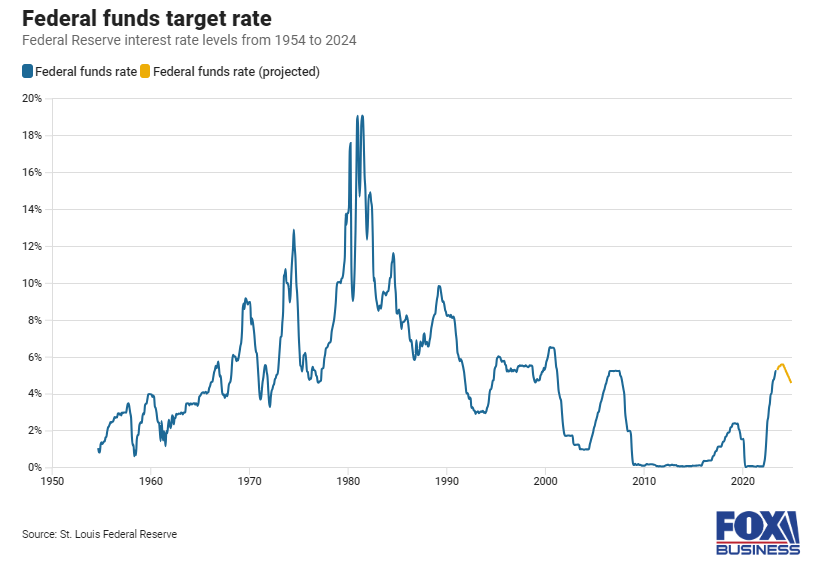
    Markets expect one more interest rate rise, but that the U.S. rate-hiking cycle has likely peaked. Higher rates can slow economic growth and reduce oil demand.

    “This is the lowest number since the pandemic … but it is important to keep in mind that this is still a transitory situation. But overall, traders are cheering this event,” said Naeem Aslam, chief investment officer at Zaye Capital Markets, describing the inflation figures.

    Brent futures were last up 47 cents at $79.87 a barrel, having risen as high as $80.05 earlier. U.S. West Texas Intermediate (WTI) crude was up 56 cents at $75.39 a barrel.

    A weaker dollar, optimism surrounding Chinese stimulus and U.S. stockpile data were also supporting the positive sentiment, said Fiona Cincotta, senior financial markets analyst at City Index.

    Meanwhile, forecasts from the U.S. Energy Information Administration (EIA) and the International Energy Agency (IEA) point to the market tightening into 2024.

    The IEA expects the oil market to stay tight in the second half of 2023, citing strong demand from China and developing countries combined with supply cuts from leading producers. New forecasts from the IEA are expected this week.

    “The oil balance gets tighter either when supply is downgraded, or demand is revised up. If both happens at the same time the change can be seismic,” said PVM analyst Tamas Varga referring to the EIA’s outlook.

    “Clearly, it is not worried about inflation-induced recession that could potentially dent global oil consumption.”

    Top producer Saudi Arabia pledged last week to extend a production cut of 1 million bpd in August, while Russia will cut exports by 500,000 bpd.

  • Gold rallies after report shows U.S. inflation cooling

    Gold rallied Wednesday after new data showed inflation in the United States was cooling, suggesting the Federal Reserve may only hike interest rates one more time this year.

    Spot gold last gained 0.79% to $1,947.39 per ounce, while U.S. gold futures added 0.81% to $1,952.70.

    The consumer price index rose just 0.2% in June, compared with forecasts for a gain of 0.3%. On an annual basis, U.S. CPI advanced 4.8%, lower than market expectations for a 5% increase.

    Friday’s slower than expected jobs report wasn’t a game changer, but helped shift the mindset of investors, with many now expecting July to mark the end of the current hiking cycle, Evangelista added.

    The end to Fed’s current monetary policy tightening cycle is getting close, several U.S. central bank officials also said on Monday. That helps bullion as it does not yield any interest.

    Harshal Barot, senior consultant at Metals Focus, said that while a July rate hike is largely priced in, “if we see core inflation still being higher than expected, then I think the expectations of another rate hike coming September will start gaining traction.”

  • Inflation rose just 0.2% in June, less than expected as consumers get a break from price increases

    • The consumer price index rose 0.2% in June and was up 3% from a year ago, the lowest level since March 2021.
    • Excluding food and energy, core CPI increased 0.2% and 4.8%, respectively.
    • Soft gains in food prices and declines in used vehicle and airline prices helped keep inflation down, while shelter prices continued to rise.
    • Worker wages adjusted for inflation increased 1.2% from a year ago.

    CPI June 2023: Inflation rose just 0.2%, less than expected as consumers get a break (cnbc.com)

  • Laurentian Bank puts itself up for sale, hires advisers to approach other Canadian lenders

    Laurentian Bank of Canada LB-T +0.45%increase is up for sale, with larger rivals now circling the country’s ninth-largest lender in pursuit of a deal that would continue a trend toward consolidation in financial services, sources say.

    Laurentian Bank confirmed in a press release that it is “conducting a review of strategic options” after The Globe and Mail revealed the lender is exploring a sale.

    Laurentian’s board of directors recently hired financial and legal advisers to quietly shop the Montreal-based bank to potential buyers, according to four sources with knowledge of the process. Two of those sources said Laurentian is believed to have received a bid from an undisclosed rival bank that helped spur the sale process.

    The Globe and Mail is not naming the sources because they are not permitted to discuss the confidential sale process.

    Laurentian Bank is in the midst of a turnaround plan after its profitability and stock price significantly underperformed those of rival banks for several years. The bank has made some headway at revamping its fortunes under chief executive officer Rania Llewellyn. But it faces headwinds as growth in its loan book is expected to slow, profit margins are starting to come under pressure and Canada’s banking regulator is asking financial institutions to hold more capital.

    Since late June, Laurentian has been in talks with several suitors, according to the four sources. Laurentian has hired JPMorgan Chase & Co., which ran last year’s sale of HSBC Canada for its British parent, three of the sources said. The bank has also hired Osler, Hoskin & Harcourt LLP as legal advisers, one source said.

    Laurentian declined a request for comment beyond the contents of the press release. In its statement, the bank said that while the review is under way, its management team is continuing to pursue its strategy and priorities “with the full support and confidence of the board.”

    JPMorgan Chase & Co. declined to comment.

    Founded in 1846, Laurentian has 57 branches and $51-billion of assets, and its core business is commercial loans to clients in Quebec, Ontario and the United States.

    Based on recent transactions, including the proposed sale of 130-branch HSBC Canada to Royal Bank of Canada RY-T +0.46%increase, a Laurentian takeover could cost between $2-billion and $2.8-billion. The bank’s book value is approximately $2.8-billion, and the market value of the company’s shares was $1.45-billion as of late Tuesday, which is a steep discount to its book value.

    One potential suitor is Bank of Nova Scotia BNS-T +0.44%increase because its executives have repeatedly said in recent years that it is a priority to expand its operations in Quebec and British Columbia, where the Toronto-based bank thinks it is underrepresented, especially in commercial banking.

    Large Quebec-based financial institutions National Bank of Canada NA-T +0.38%increase and Desjardins Group could be considered natural contenders, but National Bank has signalled that it is more focused on expanding existing operations outside of Quebec. Bank of Montreal BMO-T +0.39%increase and Canadian Imperial Bank of Commerce CM-T unchno change could also consider bids. But BMO recently closed its US$16.3-billion takeover of California-based Bank of the West, and CIBC has said its first focus is on expanding its existing business as it looks to build up its capital reserves.

    The country’s two largest banks – Royal Bank of Canada and Toronto-Dominion Bank TD-T +0.53%increase – are not expected to bid for Laurentian, the sources said. Royal Bank still needs approval for its proposed $13.5-billion takeover of HSBC Canada, the country’s seventh-largest lender. TD is focused on expansion in the U.S. market.

    Spokespeople for Scotiabank and CIBC declined to comment. Spokespeople for the other four largest banks could not immediately be reached for comment.

    Laurentian’s decision to look for a buyer follows the bank’s board conclusion that shareholders would be better served by owning a portion of a larger platform, rather than trying to compete against far larger rivals. According to one source, Laurentian’s board and Ms. Llewellyn were frustrated by losing out this year in the bidding war for mortgage lender Home Capital Group Inc., purchased in April by entrepreneur Stephen Smith for $1.7-billion.

    Laurentian Bank is only slightly more than half way through a three-year turnaround plan that sought to reframe the lender as a nimble alternative to the country’s largest banks, and to move on from costly missteps in the preceding years.

    In 2020, the bank abruptly changed CEOs, parting ways with François Desjardins midyear and hiring Ms. Llewellyn from Bank of Nova Scotia a few months later – a non-francophone who became the first woman to run a major Canadian-owned bank. At the time, Laurentian was suffering from a string of weak results and had slashed its dividend.

    An ambitious plan to modernize the bank under Mr. Desjardins, which included overhauling digital banking systems and closing nearly half its branches, was ultimately scrapped as costs mounted and revenue stalled. Instead, Ms. Llewellyn mapped out a turnaround plan after a year-long review that would simplify the bank, focus more on specialized niches such as commercial equipment financing, and rely on outside partnerships to revamp its digital banking experience.

    It wasn’t until late 2021 that Laurentian introduced a mobile banking app for smartphones, relying on technology from a partnership with a credit union.

    Ms. Llewellyn acknowledged at the outset that the turnaround would take time. In a report published in June, analyst Darko Mihelic at RBC Capital Markets said Laurentian’s loan growth is slowing as interest rates rise, and this will reduce future profitability.

    In 2021, Laurentian decertified what had been the only unionized work force at a Canadian bank. Analysts said the move made the bank a more attractive takeover target.

    Laurentian has 3,100 employees and made a $226.6-million profit last year. The bank is a fraction of the size of rivals – Scotiabank has 91,000 employees, nearly 2,400 branches and made $10.7-billion last year.

    As part of the sale process, Laurentian has set up a data room, where potential buyers can view confidential financial information, two of the sources said.

    The federal banking regulator and federal Finance Minister would need to approve a takeover of Laurentian. If the bank is sold, with government approval, it would continue a trend of the six largest banks expanding by snapping up rival lenders, wealth managers and trust companies. TD Bank, for example, vaulted to the top ranks by size when it acquired Canada Trust 23 years ago.

    A Laurentian takeover could also put pressure on other small rivals, such as Edmonton-based Canadian Western Bank, to consider selling themselves.

  • Gold Futures Settle At Near 3-week High As Dollar Drifts Lower

    Published: 7/11/2023 2:16 PM ET

    Gold prices climbed higher on Tuesday, lifting the most active futures contract to a near three-week closing high.

    A weak dollar and lower Treasury yields contributed to the bullion’s uptick.

    The dollar index, which dropped to 101.67, recovered to 101.97 around late morning, but retreated again and slid to 101.71.

    The dollar fell, weighed down by comments from several Fed officials that higher interest rates are needed to reach the 2% inflation target, but the end to the current monetary policy tightening cycle is getting close.

    Gold futures for August ended higher by $6.10 or about 0.3% at $1,937.10 an ounce, the highest close since June 21.

    Silver futures for September ended down $0.064 at $23.281 an ounce, while Copper futures for September settled at $3.7660 per pound, down $0.0185 from the previous close.

    Following last week’s mixed monthly jobs report, traders now await U.S. consumer and producer price inflation data this week for additional clarity on the rate outlook.

    The annual rate of growth by core consumer prices, which exclude food and energy prices, is expected to slow to 5% from 5.3%.

    Ahead of the inflation data, CME Group’s FedWatch Tool is indicating a 92.4% chance of another quarter point rate hike at the next Fed meeting later this month.

  • Crude Oil Futures Settle Higher

    Published: 7/11/2023 3:19 PM ET

    Crude oil futures settled higher on Tuesday, lifted by the Energy Information Administration’s forecast of a drop in oil production and the International Energy Agency’s forecast about increased demand from China.

    A weak dollar contributed as well to the rise in oil prices. The dollar dropped to a 2-month low after comments from several Fed officials suggested the U.S. central bank is nearing the end of its rate-hiking cycle.

    West Texas Intermediate Crude oil futures for August ended higher by $1.84 or about 2.52% at $74.83 a barrel.

    Brent crude futures were up $1.78 or 2.29% at $79.47 a barrel a little while ago.

    The EIA has cut its forecast for U.S. oil production by 50,000 barrels per day this year following the OPEC+ extending output cuts through 2024.

    In its Short Term Energy Outlook, the EIA said oil production will likely rise by 670,000 barrels per day this year.

    The EIA also said that it expects Brent crude spot prices will average $78 a barrel this month.

    Meanwhile, the IEA expects oil market to remain tight in the second half of this year due to strong demand from China and other major consumers, and due to additional supply cuts announced by Russia and Saudi Arabia.

    Traders now await weekly oil reports from the American Petroleum Institute (API) and EIA. The API’s data is due later today, while the EIA will release its crude inventory data Wednesday morning.

  • July 11 – TSX Ends Modestly Higher

    The Canadian market ended modestly higher on Tuesday, aided by gains in energy shares.

    Movements were somewhat lackluster with investors largely staying cautious ahead of the Bank of Canada’s interest rate decision tomorrow, and U.S. consumer and producer prices data, due later in the week.

    The Bank of Canada is widely expected to raise interest rate by 25 basis points.

    The benchmark S&P/TSX Composite Index ended with a gain of 56.11 points or 0.28% at 19,878.56.

    TransAlta Renewables (RNW.TO) soared 18.4%. Dye & Durham (DND.TO) climbed 6.5%. Precision Drilling Corp (PD.TO), Linamar Co (LNR.TO), Colliers International (CIGI.TO), BRP Inc (DOO.TO) and goeasy (GSY.TO) gained 1 to 3%.

    MTY Food Group (MTY.TO) gained 4.3%. The company reported second quarter net income of C$30.4 million, or C$1.24 per share, compared to C$28.6 million, or C$1.17 per share, a year ago. Normalized adjusted EBITDA increased 57% to C$74.6 million. Revenue increased to C$305.22 million from C$162.52 million, last year.

    Quebecor Inc (QBR.TO) ended more then 6.5% down. GFL Environmental Inc (GFL.TO), TFI International (TFII.TO), Dollarama (DOL.TO), George Weston (WN) and Thomson Reuters (TRI.TO) also ended notably lower.

  • July 10 – TSX Ends Slightly Down

    | Published: 7/10/2023 5:34 PM ET

    Canadian stocks turned in a mixed performance on Monday as investors largely stayed cautious ahead some key U.S. economic data, including a report on consumer price inflation.

    Healthcare and materials shares moved higher, while communications and utilities shares lost ground. Stocks from rest of the sectors closed mixed.

    The benchmark S&P/TSX Composite Index ended with a loss of 8.59 points or 0.04% at 19,822.45 after moving between 19,798.79 and 19,863.30.

    Healthcare stocks Tilray Inc (TLRY.TO) and Bausch Health Companies (BHC.TO) surged 6% and 4.7%, respectively.

    In the materials sector, K92 Mining Inc (KNT.TO) soared nearly 12%. Lithium Americas Corp (LAC.TO), Kinross Gold Corp (K.TO), Oceanagold Corp (OGC.TO), Centerra Gold Inc (CG.TO), Novagold (NG.TO), Equinox Gold Corp (EQX.TO), Eldorado Gold (ELD.TO), First Majestic Silver Corp (FR.TO), Iamgold (IMG.TO) and Alamos Gold Inc (AGI.TO) gained 3 to 5%.

    Quebecor Inc (QBR.B.TO), down 4.25%, was the biggest loser in the communications sector. Cogeco Communications (CCA.TO) and Rogers Communications (RCI.B.TO) lost 2.6% and 2.4%, respectively.

    Utilities shares Transalta Corp (TA.TO), Algonquin Power & Utilities Corp (AQN.TO), Brookfield Infra Partners (BIP.UN.TO), Northland Power (NPI.TO), Fortis Inc (FTS.TO) and Emera Inc (EMA.TO) ended lower by 1.5 to 2.1%.

    On the economic front, data from Statistics Canada showed the total monthly value of building permits in Canada increased by 10.5% to C$ 10.5 billion in May 2023, partially reversing a revised 21% decline in the previous month. Comparing year-on-year figures, the value of building permits declined by 13.5% in May.

  • Bank of Canada expected to raise interest rate in the face of mixed signals

    A month after surprising markets by restarting interest rate hikes, the Bank of Canada is widely expected to ratchet up borrowing costs again this week, despite the continuing decline in inflation and mixed signals about the strength of the economy.

    The central bank ended a five-month pause on monetary policy tightening in June, pushing its benchmark interest rate up to 4.75 per cent, the highest level since 2001. Most Bay Street forecasters believe the bank will proceed with another quarter-point hike on Wednesday before moving back to the sidelines.

    Until recently, few economists expected rate hikes to be on the table this summer. The majority thought the Canadian economy would be in, or near, a recession by now, squeezed by the most aggressive interest rate-hike cycle in decades.

    But consumer spending and labour markets have proven remarkably resilient to higher borrowing costs, complicating the Bank of Canada’s efforts to get inflation under control. Governor Tiff Macklem and his team are trying to bring economic growth to a standstill to reduce upward pressure on consumer prices.

    Inflation has fallen considerably, reaching an annual rate of 3.4 per cent in May. But the bank’s governing council concluded in June that the economy was still experiencing “excess demand” and that rates needed to move higher to prevent inflation from getting stuck “materially above” the bank’s 2-per-cent target. The question for policy makers this week is whether an additional increase is needed to finish the job.

    “We’re not convinced that the economy needs further tightening. But what it comes down to is that five weeks ago the bank told us that policy at 4.5 per cent wasn’t restrictive enough,” said Taylor Schleich, director of economics and strategy at National Bank of Canada NA-T -0.36%decrease. “Holistically, if the bank thinks that things weren’t restrictive at 4.5 per cent, 4.75 probably isn’t the number either.”

    Financial markets are lining up behind a move. Interest rate swaps, which capture expectations about future rate decisions, are pricing in a roughly 70-per-cent chance the central bank will deliver a quarter-point hike on Wednesday, according to Refinitiv data. Market pricing suggests the bank will then remain on hold through the fall.

    Another rate hike would mean more pain for mortgage holders, particularly homeowners with variable-rate mortgages or fixed-rate mortgages that are coming up for renewal. It could also put a chill on the summer housing market. Real estate activity in several large markets, including Toronto and Vancouver, slowed notably in June, which some economists chalked up to the rate hike at the start of that month.

    Central banks around the world are facing a similar cocktail of economic resilience and persistent inflation. The Bank of England and Norway’s central bank both delivered larger-than-expected half-point rate increases last month, while other central banks, including the European Central Bank, continued tightening and warned of further rate hikes ahead.

    The U.S. Federal Reserve held its policy rate steady last month, but committee members indicated they expect to raise rates two more times this year.

    Although analyst and market sentiment is firmly behind a rate increase by the Bank of Canada this week, the case for further tightening has, in some ways, weakened over the past five weeks. Economic data were uniformly strong ahead of the June decision. They are now more mixed.

    The June jobs numbers provide the strongest argument for another hike. Canadian employers added 60,000 positions last month, Statistics Canada reported Friday, three times what Bay Street was expecting. That reversed a slight decline in May and extended Canada’s remarkable job creation streak, which has added nearly 300,000 jobs over the first half of the year.

    Markets and economists react: How views have shifted on the BoC’s next moves after June’s surprising job gains

    At the same time, there are signs of cooling in the labour market. The unemployment rate ticked up to 5.4 per cent from 5.2 per cent, as job creation failed to keep pace with rapid population growth driven by immigration. And the pace of hourly wage growth, a key variable for inflation, particularly in the service sector, slowed to 4.2 per cent from 5.1 per cent in May.

    Other data suggested that rate hikes are starting to bite. Consumer delinquencies are up, job vacancies are falling, and the central bank’s latest business survey found that many companies expect sales to slow and cost pressures to ease.

    Consumer price index inflation continues to march lower, dropping to 3.4 per cent in May from 4.4 per cent in April. That’s a long way from the four-decade high of 8.1 per cent reached last summer, and only a few ticks above the upper end of the central bank’s inflation-control band.

    Still, the decline in inflation owes mostly to year-over-year comparisons for oil prices. Measures of “core” inflation, which strip out volatile components such as energy and food, are proving stickier.

    “The slowing in inflation that we’ve seen recently, it’s largely coming from energy – you’re not seeing the same big increases at the pump that we had last year,” said Leslie Preston, senior economist at Toronto-Dominion Bank TD-T +0.19%increase. “So headline inflation is coming down. But the less volatile inflation that the Bank of Canada targets is still well above three per cent and it’s not coming down as quickly.”

    Interest rate increases work with a considerable lag. That raises the risk that the Bank of Canada will overdo it, stepping on the monetary policy brakes just as the economy is taking a turn for the worse.

    Andrew Grantham, senior economist with Canadian Imperial Bank of Commerce CM-T -0.39%decrease, said he doesn’t think another rate is necessary to guide inflation back down to two per cent. However, he believes the central bank will raise rates again this week, based on its hawkish communications at the June meeting and the strength of the latest jobs data.

    “We have to forecast what the bank will do, not what we think they should do necessarily,” Mr. Grantham said. “And it seems to me that they’re erring on the side of doing too much rather than too little with the knowledge that they can always cut interest rates next year if the economy slows down more than anticipated.”

    The central bank will publish a new forecast for economic growth and inflation on Wednesday alongside its rate announcement.