
Canada unexpectedly lost 24,800 jobs in January but the unemployment rate dipped to a 16-month low of 6.5 per cent as fewer people looked for work, Statistics Canada indicated on Friday.
Analysts had forecast a gain of 7,000 jobs and for the unemployment rate to remain unchanged at 6.8 per cent.
Full-time employment in January rose by 44,900 jobs while part time employment fell by 69,700 positions.
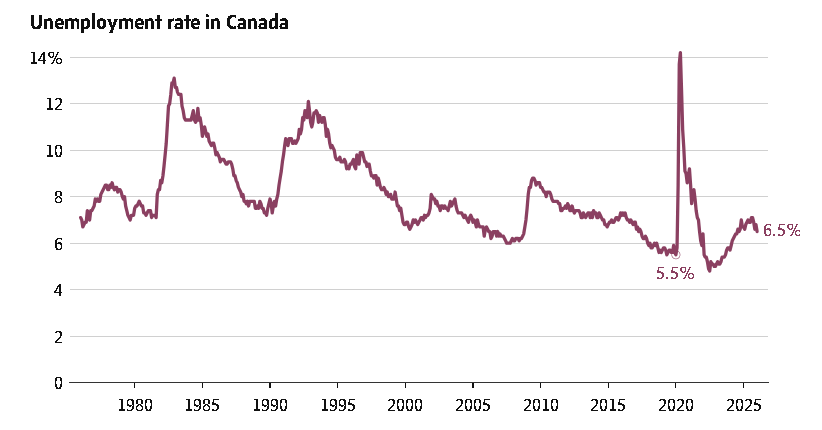
The unemployment rate – the lowest since the 6.5 per cent recorded in September, 2024 – fell across most major demographic groups, largely reflecting declines in the number of job searchers.
The manufacturing sector lost 27,500 positions, most of them in the industrial heartland of Ontario, where some key industries have been hit by U.S. tariffs.
Overall job losses in the manufacturing, educational services and public administration sectors outweighed gains in the information, business, agriculture and utilities sectors.
Macklem says economy undergoing structural change, plays down chance of further rate cuts
The Bank of Canada says the labour market is softening after the economy added a total of 181,000 new jobs from September through November. Canada created 10,100 jobs in December.
The employment rate in January fell 0.1 percentage points to 60.8 per cent, the first such decline since August, 2025.
The average hourly wage of permanent employees – a gauge closely tracked by the Bank of Canada to ascertain inflationary trends – dipped to a seven-month low of 3.3 per cent, down from the 3.7 per cent recorded in December.
The central bank held its key policy rate steady at 2.25 per cent last week and said this was about the right level to keep inflation close to its 2-per-cent target. Money markets expect rates to stay on hold for the rest of the year.
Leave a Reply
You must be logged in to post a comment.