Author: Consultant

  • Glencore plans to shut Canada’s largest copper metal operation over costs, sources say

    Glencore GLNCY -2.31%decrease is planning to close its Horne smelter, Canada’s largest copper metal-producing operation, due to environmental issues and the millions of dollars needed to upgrade the facility, two sources with knowledge of the matter said.

    The London-listed miner does not disclose copper metal production figures for its Canadian operation, but industry sources estimate annual output at more than 300,000 metric tons.

    The closure of Horne would reinforce forecasts of global shortages partly due to supply disruptions including accidents at mines in Indonesia and Chile.

    Expectations of deficits in coming years have buoyed copper prices, which hit a record US$11,200 a ton on Oct. 29.

    “Glencore is not currently considering the closure of the Horne smelter or CCR,” a Glencore spokesperson said in response to a Reuters request for comment.

    Its Canadian copper operations include Horne and the Canadian Copper Refinery. Both are located in the province of Quebec. The two sites employ more than 1,000 workers, according to industry sources.

    “Smelters currently face enormous pressures around the world, including significant financial, regulatory and operational pressure,” Glencore’s spokesperson said.

    “Horne and CCR are not exempt from this though both assets play an important role in the supply of critical raw materials for the North American market and abroad.”

    G7 pact pledges funds for Quebec, Ontario critical minerals projects

    While both plants will be closed, as yet there is no date, according to the two sources, who said the operations require potentially more than US$200-million ($281-million) to modernize.

    “We are continuing to implement our emissions reduction plan by advancing studies and other works,” Glencore’s spokesperson said.

    “We are also working closely with all stakeholders to map a path forward that preserves Horne’s ongoing smelting operations in Canada. This includes a clear and predictable regulatory framework necessary to secure the appropriate investment.”

    The commodity trader is facing a lawsuit in Quebec’s Superior Court from local people for Horne’s arsenic emissions. The court said damages back to 2020 can be claimed.

    Long-term exposure to arsenic can cause cancer.

    Glencore’s plans to close Horne and CCR are not related to the case, but to the costs of making the operation environmentally safe, according to the two sources.

    “Glencore Canada acknowledges the Superior Court’s decision to authorize the class action lawsuit,” Glencore’s spokesperson said in response to a Reuters request for comment on the lawsuit.

    “As this is an ongoing legal matter that we are contesting in court, we won’t be commenting publicly on the proceedings at this time. We are confident that the Horne Smelter’s operations are safe for the public,” Glencore said.

    Teck seeks to ease investor concerns around copper joint venture with Anglo as shareholder vote looms

    Founded in 1927, the Horne smelter pioneered the recycling of electronic scrap in 1980.

    Glencore processes around 100,000 metric tons of discarded electronics annually to produce copper, nickel, cobalt, gold and silver, according to its website.

    Horne also processes concentrate to make copper anode which is turned into cathode by CCR. Much of Glencore’s copper metal production in Canada goes to the United States, which is a net importer.

    Canada exported more than 150,000 tons of copper to the United States last year, accounting for some 17 per cent of U.S. imports and ranking it second behind Chile, which accounted for 70 per cent.

    Profits at custom smelters – those that buy copper concentrate on the open market – have dropped this year due to pressure on treatment charges from global shortages of concentrate due to mine disruptions.

    Miners pay treatment and refining charges to smelters to process their concentrate into refined metal.

    Treatment and refining charges have been negative on the spot market since last year meaning smelters have to pay miners for concentrate instead of being paid to process the feedstock into metal.

    Glencore sold its Pasar copper refinery in the Philippines, a custom smelter, earlier this year.

  • TOROMONT ANNOUNCES RESULTS FOR THE THIRD QUARTER OF 2025 AND QUARTERLY DIVIDEND

    Consolidated Results

    • Revenue decreased $23.1 million or 2% in the third quarter compared to the similar period last year, on lower revenue in the Equipment Group down 4%, partially offset by higher revenue at CIMCO up 22%. The Equipment Group continued to deliver against the healthy order backlog, in addition to revenues from the acquired business. Higher rental and product support revenue were offset by lower equipment sales in mining. CIMCO’s growth reflects good package revenue and higher product support revenue in Canada and the US.
    • Revenue increased $66.7 million (up 2%) to $3.8 billion for the year–to–date period. Equipment Group revenues were relatively unchanged as revenue from the acquired business along with higher rental and product support activity was largely offset by lower equipment sales in mining, versus a comparatively strong quarter last year for mining equipment deliveries. CIMCO revenue increased 15% compared to 2024, on good package and product support activity.
    • In the quarter, a property was sold resulting in a pre-tax gain of $13.7 million. In addition, the acquisition of AVL resulted in pre-tax earnings of $6.3 million in the third quarter ($2.2 million YTD) net of non-cash expenses related to purchase price accounting of $27 million ($57 million YTD). Both of these items are reported in the Equipment Group and impact comparability of results in both the quarter and year-to-date.
    • Operating income(1) increased 8% in the quarter. Excluding the gain on property disposition, operating income increased $0.9 million or 1% compared to Q3 2024, as higher gross margins were partially offset by the lower revenue and higher expenses.
    • Operating income was relatively unchanged at $458.8 million for the year–to–date period. Excluding the gain on property disposition, operating income decreased $13.9 million or 3% compared to the similar period last year, reflecting higher expenses, partially offset by improved gross margins. Operating income was 12.1% of revenue compared to 12.4% in the similar period last year.
    • Net interest expense increased by $3.9 million in the quarter and $17.6 million in the first nine months of the year reflecting interest expense on higher borrowings with the new senior debentures issued in March 2025, as well as lower interest income earned on cash on hand due to lower interest rates.
    • Net earnings increased $9.7 million or 7% in the quarter versus a year ago to $140.6 million. EPS was $1.73 (basic) and $1.72 (fully diluted), 8% higher compared to the same period last year.
    • For the year–to–date period, net earnings decreased $10.8 million or 3% to $339.4 million compared to the similar period last year. EPS was $4.18 (basic) and $4.15 (fully diluted), 2% lower compared to last year.
    • Bookings(1) for the third quarter increased 47% compared to last year with higher bookings at both CIMCO and the Equipment Group, including a significant contribution from the acquired business. On a year–to–date basis, bookings increased 13% with both groups reporting higher bookings: Equipment Group up 13% and CIMCO up 13%.
    • Backlog(1) of $1.3 billion as at September 30, 2025, was up from $1.1 billion as at September 30, 2024. Backlog remains healthy, reflecting deliveries and progress on construction schedules, good new booking activity and backlog related to the acquired business.

    https://money.tmx.com/quote/TIH/news/7143833258791914/TOROMONT_ANNOUNCES_RESULTS_FOR_THE_THIRD_QUARTER_OF_2025_AND_QUARTERLY_DIVIDEND?utm_source=chatgpt.com

  • Calendar: Nov 3 – Nov 7

    * Note: Several additional U.S. data reports could be be released if the government shutdown is resolved. Earnings dates are subject to change

    Monday November 3

    Manufacturing PMIs released in China and Europe

    930 am ET: S&P global manufacturing PMI

    10 am ET: U.S. ISM manufacturing PMI

    130 pm ET: Bank of Canada Governor Macklem holds a fireside chat in Toronto

    Auto sales for October

    Earnings include: Berkshire Hathaway Inc.; CT REIT; Franco-Nevada Corp.; Gibson Energy Inc.; Palantir Technologies Inc.; Topaz Energy Corp.

    Tuesday November 4

    Japan releases manufacturing PMI

    Canadian federal budget

    Earnings include: Advanced Micro Devices Inc.; Amgen Inc.; Artemis Gold Inc.; Boardwalk REIT; Colliers International Group Inc.; Dream Industrial REIT; Energy Fuels Inc.; Ero Copper Corp.; First Capital Realty Inc.; Fortis Inc.; Hut 8 Corp.; IA Financial Corp. Inc.; Iamgold Corp.; Intact Financial Corp.; Kinross Gold Corp.; Marriott International Inc.; Meg Energy Corp.; Ovintiv Inc.; Pfizer Inc.; Shopify Inc.; Spotify Technology SA; SSR Mining Inc.; Uber Technologies Inc.; Wesdome Gold Mines Ltd.

    Wednesday November 5

    China and euro area services PMIs

    Germany releases factory orders and France industrial production

    815 am ET: U.S. ADP national employment report for October

    930 am ET: S&P global services PMI

    10 am ET: U.S. S&P global services/composite PMI

    430 pm ET: Bank of Canada Governor Macklem and senior deputy Rogers testify before the House Standing Committee on finance

    Earnings include: Applovin Corp.; Arm Holdings ADR; Brookfield Renewable Partners LP; B2Gold Corp.; Cameco Corp.; CGI Inc.; Choice Properties REIT; Doordash Inc.; First Majestic Silver Corp.; GFL Environmental Holdings Inc.; Great-West Lifeco Inc.; Keyera Corp.; Kinaxis Inc.; Linamar Corp.; Maple Leaf Foods Inc.; McDonald’s Corp.; Novo Nordisk ADR; Nutrien Ltd.; Open Text Corp.; Robinhood Markets Inc.; Stella-Jones Inc.; Suncor Energy Inc.; Sun Life Financial Inc.; Torex Gold Resources Inc.; WSP Global Inc.

    Thursday November 6

    China trade surplus

    Euro area retail sales and Germany industrial production

    7 am ET: Bank of England monetary policy announcement

    10 am ET: Canada Ivey PMI

    10 am ET: U.S. global supply chain pressure index

    1030 am ET: Bank of Canada Governor Macklem and senior deputy Governor Rogers testify before the Senate Banking Committee

    Ontario fall fiscal update

    Earnings include: Arc Resources Ltd.; AstraZeneca PLC; BCE Inc.; Bombardier Inc.; Brookfield Business Partners LP; Canadian Apartment Properties REIT; Canadian Tire Corp. Ltd.; Chartwell Retirement Residences; ConocoPhillips; Definity Financial Corp.; DPM Metals Inc.; Exchange Income Corp. Fairfax Financial Holdings Ltd.; IGM Financial Inc.; Lundin Gold Inc.; Pembina Pipeline Corp.; Premium Brands Holdings Corp.; Quebecor Corp.; RioCan REIT; Saputo Inc.; TC Energy Corp.; TransAlta Corp.; Wheaton Precious Metals Corp.

    Friday November 7

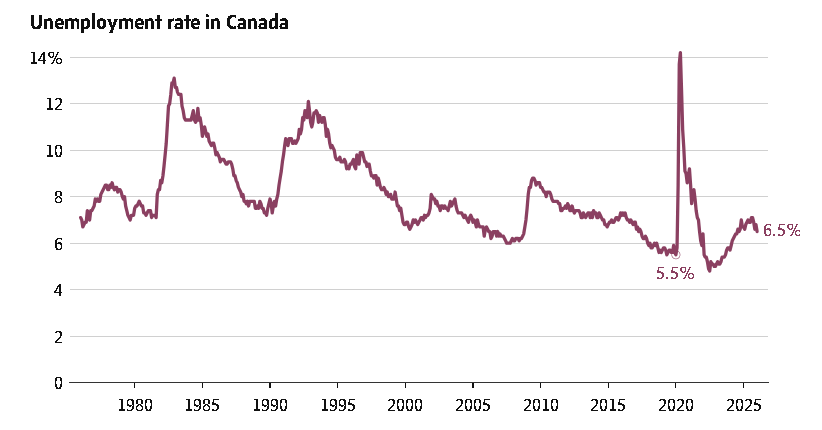
    830 am ET: Canada employment for October. Consensus is for 20,000 net job losses, with the unemployment rate rising one notch to 7.2%. Average hourly wages are expected to be up 3.2% from a year ago.

    10 am ET: University of Michigan consumer sentiment

    Earnings include: Algonquin Power & Utilities Corp.; Atco Ltd.; Boralex Inc.; Brookfield Asset Management Ltd.; Brookfield Infrastructure Partners LP; Canadian Utilities Ltd.; Constellation Software Inc.; Emera Inc.; Enbridge Inc.; Endeavour Silver Corp.; Onex Corp.; Telus Corp.

  • Natural Gas Price forecast for winter 2025/2026 (ChatGPT)

    Here’s a tight, sourced outlook for winter 2025/26 U.S. natural gas (Henry Hub) with what’s priced in now and the main swing risks.

    What’s priced in today (futures strip)

    As of today’s quotes, the CME winter strip implies a modest run-up into Jan and easing by March:

    • Dec ’25: ~$3.84
    • Jan ’26: ~$4.12
    • Feb ’26: ~$3.90
    • Mar ’26: ~$3.57. CME Group

    Base-case takeaway: the market is discounting a $3.6–$4.2/MMBtu winter, peaking in January.

    Fundamentals setting the tone

    • High starting storage: EIA shows 3,882 Bcf for the week ending Oct 24 and projects near-record start-of-winter inventories and an end-of-withdrawal level around 1,990 Bcf (≈8% above 5-yr avg) if weather is normal—this dampens spike risk. U.S. Energy Information Administration+1
    • STEO price path: EIA’s latest Short-Term Energy Outlook has Henry Hub near $4.10 in Jan ’26, up from sub-$3 in Sep ’25 thanks to seasonal demand, but softer than prior forecasts due to stronger production/storage. U.S. Energy Information Administration
    • Weather setup: NOAA’s Winter Outlook (issued Oct 16) leans La Niña with EC/“equal chances” of below/near/above-normal temps for much of the Lower-48 and wetter PNW/Northern Plains—i.e., not a strongly bullish cold signal nationally. Climate Prediction Center+1
    • LNG exports: U.S. LNG capacity is ramping through 2025-26 (Plaquemines P1/P2, Corpus Christi Stage 3; Golden Pass commissioning starting Q4 ’25). Adds winter demand pull but timing is staggered. Riviera Maritime Media+3U.S. Energy Information Administration+3U.S. Energy Information Administration+3
    • Global backdrop: IEA’s Gas 2025 notes comfortable near-term balances with big LNG additions coming, curbing extreme upside unless winter is harsh. iea.blob.core.windows.net+1

    My forecast (Henry Hub, Dec–Mar average)

    • Base case (most likely): $3.60–$4.20/MMBtu average, peak days in late Dec–Jan if cold shots line up. Supported by high storage + only moderately cold NOAA outlook; aligns with the strip and EIA STEO. CME Group+2U.S. Energy Information Administration+2
    • Bull case (colder-than-normal or LNG ramp faster): brief spikes into $5–$6 possible on Arctic outbreaks or LNG outages flipping to heavy draws—but persistence would require multi-week cold across major load centers. U.S. Energy Information Administration+1
    • Bear case (warm winter / production surprises): $3.00–$3.50 if DJF temps skew warm and storage stays well above average. U.S. Energy Information Administration+1

    What would change the call quickly

    1. Weather: Early-season cold in the Midwest/Northeast (watch NOAA weekly updates) → shifts toward bull case. Climate Prediction Center
    2. LNG timing: Faster commissioning at Golden Pass and steady Plaquemines/Corpus ramp → stronger winter baseload demand. Delays do the opposite. argusmedia.com+1
    3. Storage trajectory: EIA weekly prints materially below 5-yr → tightens balances; persistent above-avg → caps rallies. U.S. Energy Information Administration

    Practical read-across (Canada)

    If you hedge off Henry Hub, expect AECO basis to move with pipeline/maintenance dynamics; directional winter view still anchors to HH.

  • Who is LYING?

    Carney says he advised Ford not to run anti-tariff ad

    Prime Minister Mark Carney said he advised Ontario Premier Doug Ford not to run a TV ad critical of Donald Trump’s tariffs that resulted in the U.S. President cancelling trade talks and threatening higher levies.

    Speaking to reporters at the Asia-Pacific Economic Cooperation summit, Mr. Carney also confirmed he had apologized to Mr. Trump for the advertisement.

    “The President was offended by the ad and it’s not something I would have done, which is to put in place that advertisement, and so I apologized to him.”

    He said the apology was conveyed to the U.S. President Wednesday evening when the pair and other leaders attended a dinner hosted by South Korean President Lee Jae Myung. The meal was in Mr. Trump’s honour.

    Mr. Carney, who had viewed the ad before it went to air, said he had advised the Ontario premier not to broadcast it. “You saw what came of it,” he said of the fallout from the advertisement.

    Mr. Ford has defended the TV spot but Mr. Carney noted Saturday “there are other premiers who have different view in terms of the utility of those ads.”

    Mr. Ford’s office declined to comment on Saturday, and pointed to the Premier’s previous comments defending the ad. Mr. Ford has not directly said whether Mr. Carney told him not to run the ad.

    When asked last week if the Prime Minister approved the ad, Mr. Ford said, “They know what I was doing, and I said I was going to stop it on Monday. It was very successful.”

    Canada has been negotiating with the Trump administration for more than six months in hopes of getting the U.S. President to reduce a slew of tariffs he’s imposed on Canadian goods.

    Mr. Carney said the two sides had been making progress before talks were suspended last week.

    On Friday, Mr. Trump told reporters he did not plan to restart trade talks with Canada despite the fact he is fond of Mr. Carney and regardless of the fact the Canadian Prime Minister apologized for the TV ad. “I have a very good relationship. I like him a lot. But you know, what they did was wrong,” the U.S President said.

    Asked what his next move was, Mr. Carney said it’s the federal budget on Nov. 4 in which he will introduce measures to help refashion the Canadian economy for an era of U.S. protections where businesses in Canada need to find alternative markets.

    “We can spend our time watching Truth Social,” Mr. Carney said. Or, Canada can restructure its economy, he said.

    “We’re focusing on what we can control, which first and foremost is how we build at home.”

    The U.S. President broke off trade talks with Canada last week, citing the Ontario government TV ad. After it aired during Game 1 of the World Series, he announced that he would boost tariffs on Canadian imports by another 10 per cent.

    The 60-second TV spot used footage from nearly 40 years ago of former U.S. president Ronald Reagan decrying American protectionism, saying such trade barriers hurt every American worker and consumer.

    Mr. Trump has not yet issued any executive order to enforce the threatened 10-per-cent hike. It’s not clear if this new levy would apply to all Canadian imports or a selection of them. And he has announced no date for this increase.

    In addition to U.S. tariffs on goods not compliant with the United States-Mexico-Canada trade agreement, Mr. Trump has imposed a number of sectoral tariffs that affect Canadian industry disproportionately, including a 50-per-cent levy on steel and aluminum and a 25-per-cent levy on automobiles. Softwood producers are facing levies totalling more than 45 per cent.

  • Magna International reports US$305M Q3 profit, sales up from year ago

    Magna International Inc. reported US$305 million in net income attributable to the company, down from US$484 million in the same quarter last year. The auto parts company, which keeps its books in U.S. dollars, says the profit amounted to US$1.08 per diluted share for the quarter ended Sept. 30 compared with US$1.68 per diluted share a year earlier. Sales for the quarter totalled US$10.46 billion, up from US$10.28 billion in the same quarter last year. On an adjusted basis, Magna says it earned US$1.33 per diluted share in its most recent quarter, up from an adjusted profit of US$1.28 per diluted share a year earlier. In its outlook, Magna says it now expects company sales for 2025 to total between US$41.1 billion and US$42.1 billion compared with earlier guidance for between US$40.4 billion and US$42.0 billion. Adjusted net income attributable to the company is expected to be between US$1.45 billion and US$1.55 billion compared with earlier guidance for between US$1.35 billion and US$1.55 billion. 

  • IMO: Imperial Oil profit falls on impairment charge, lower crude prices

    Canadian oil producer Imperial Oil IMO-T -2.24%decrease posted a sharp fall in third-quarter profit on Friday, hurt by non-cash impairment and restructuring charges and lower crude prices.

    In September, Imperial said it would cut its work force by about 20 per cent by the end of 2027, part of a major restructuring that would eventually shutter most of its presence in the oil-and-gas city of Calgary.

    The planned layoffs come as global crude prices have slumped this year due to increased output from the OPEC+ group of oil producers and trade policy uncertainty.

    Benchmark West Texas Intermediate fell nearly 14 per cent in the July–September quarter from last year.

    Imperial Oil CEO says company can weather trade war’s economic turmoil

    The quarter included a $306-million after-tax non-cash impairment of Imperial’s Calgary campus and a $249-million after-tax restructuring charge.

    The Calgary-based company said its net income fell to $539-million, or $1.07 per share, in the quarter ended Sept. 30, from $1.24-billion, or $2.33 per share, a year earlier.

  • Magna raises annual sales forecast on demand for vehicle assembly, safety tech

    Magna International MG-T +3.54%increase raised its annual sales forecast on Friday, as the Canadian auto parts supplier leans on demand for its vehicle assembly business and safety systems.

    The results follow peers Aptiv APTV-N -0.52%decrease and BorgWarner BWA-N -3.74%decrease warning of production snarls from a supply crunch related to Dutch firm Nexperia and a fire at a critical aluminum supplier.

    Magna, which counts Ford, General Motors, Stellantis and other European automakers as customers, expects its annual sales to be between US$41.1-billion ($57.6-billion) and US$42.1-billion ($59-billion), up from its prior range of US$40.4-billion ($56.6-billion) to US$42.0-billion ($58.8-billion).

    U.S.-listed shares of the company were up about 1 per cent in premarket trade.

    Federal MPs question Stellantis executive about moving Jeep production from Brampton

    Steady demand for advanced driver-aid safety technology and auto parts from automakers ramping up production has helped auto parts suppliers amid the disruptions caused by U.S. tariffs.

    Magna, which has factories in North America and Europe, assembles units for automakers at its complete vehicle manufacturing unit.

    Its quarterly sales rose 1.7 per cent to US$10.5-billion ($14.7-billion) from a year earlier. Analysts on average expected the company to report sales of US$10.14-billion ($14.2-billion), according to data compiled by LSEG.

    On an adjusted basis, Magna earned US$1.33 ($1.86) per share for the quarter through September, above estimates of US$1.21 ($1.70).

  • Cenovus profit rises as record output, refinery strength offset weak oil prices

    Cenovus Energy CVE-T +0.68%increase posted a rise in third-quarter profit on Friday, driven by record oil sands production and near-full refinery utilization that helped offset weaker crude prices.

    U.S.-listed shares of the Canadian oil and gas producer rose 1.5 per cent in premarket trading.

    The Calgary-based producer’s results come as it pursues a major expansion through its planned $8.6-billion acquisition of MEG Energy MEG-T +0.37%increase.

    A MEG shareholder vote on the deal was postponed this week to allow for additional regulatory disclosures.

    Cenovus produced a record 832,900 barrels of oil equivalent per day (boepd) in the quarter, up from 771,300 boepd a year earlier, led by higher volumes at its Foster Creek and Christina Lake projects.

    Refining throughput also hit a record 710,700 barrels per day (bpd), up from last year’s 642,900 bpd, with U.S. plants running at 99 per cent utilization and per-barrel costs down 24 per cent from a year earlier.

    These Canadian oil stocks with long-life assets are seeing insider public market buying

    CEO Jon McKenzie said Cenovus delivered record volumes across the business with major growth projects near completion.

    Drilling at the company’s West White Rose offshore project is due to start by the end of the year, with first oil expected in 2026.

    The results also come against the backdrop of volatile oil markets, with the benchmark Brent crude averaging about US$68 a barrel in the July–September quarter, down more than 13 per cent from a year earlier, as OPEC+ output hikes and slowing global demand pressured prices.

    Cenovus trimmed its 2025 U.S. downstream throughput forecast to between 510,000 and 515,000 bpd, about 52,500 barrels lower at the midpoint, as it closed the sale of its 50-per-cent interest in WRB Refining LP and received proceeds of $1.8-billion.

    Cenovus said net income rose to $1.29-billion, or 72 cents per share, in the three months ended Sept. 30, from $820-million, or 42 cents per share, a year earlier.